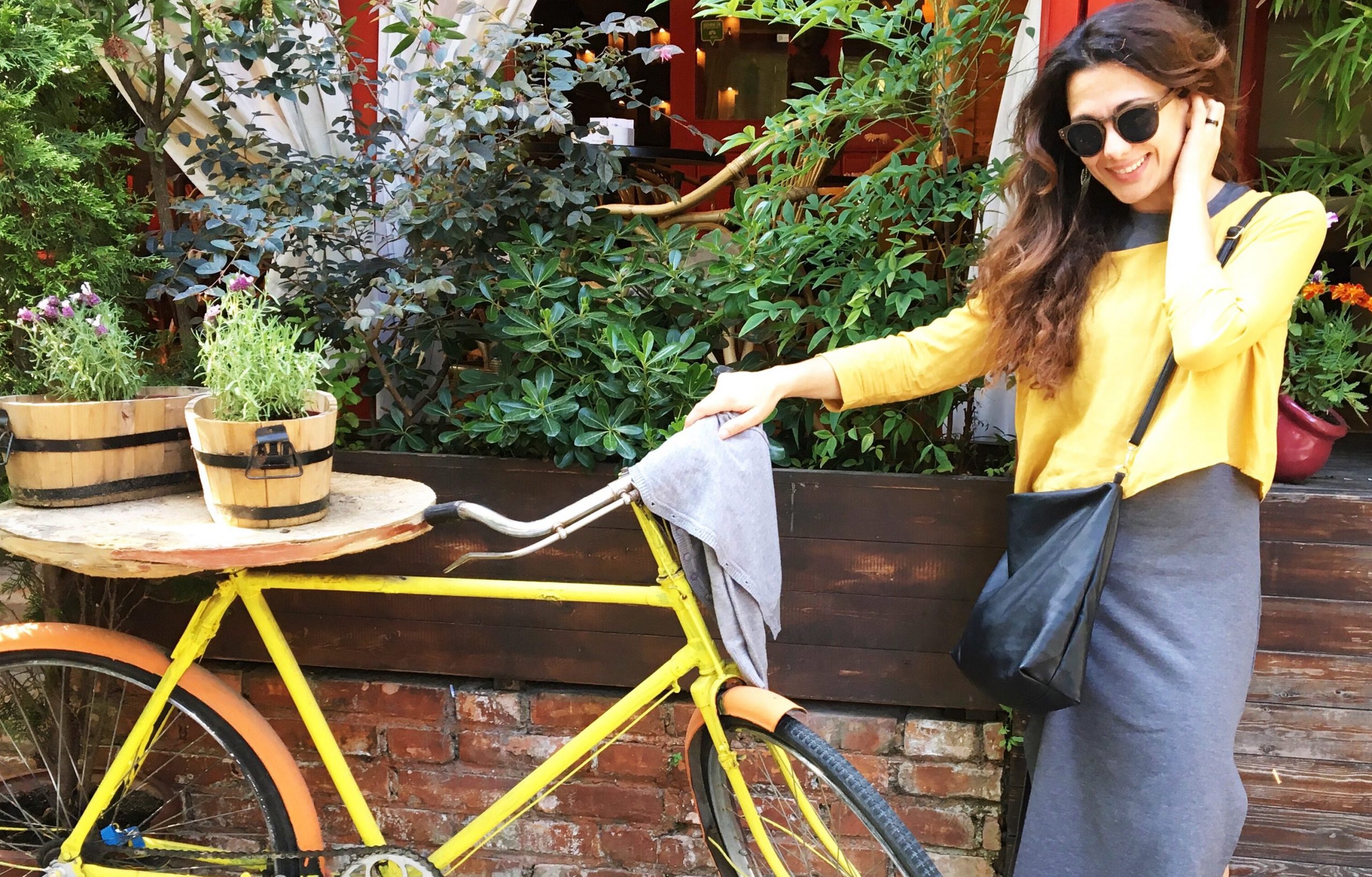

Kalemegdan is my favourite place in one of my favourite cities in the world: Belgrade.
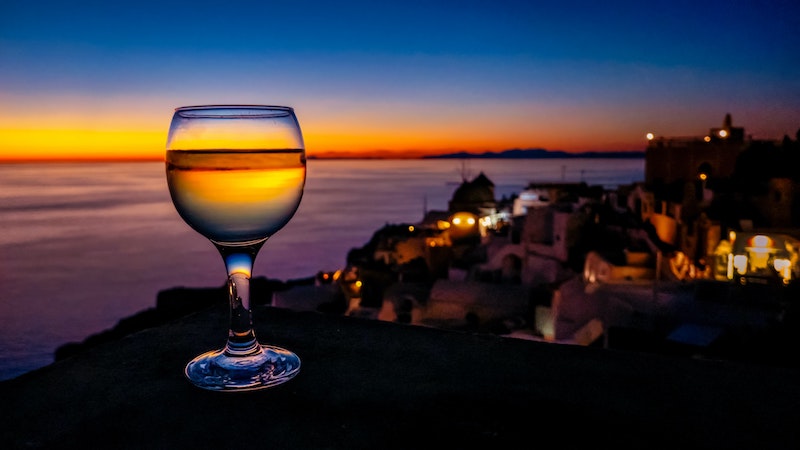
The Belgrade Fortress rises above the confluence of the Sava and Danube rivers, offering some of the most beautiful views in the city.
Along its walls and throughout the surrounding park, you will find people sitting together, talking, reading, sharing silence, or simply watching the horizon.
I’ve visited Belgrade three times over the years, and each time I found a different city.
I watched parts of the historic centre being restored. I saw the transformation of Savamala and the rise of the Belgrade Waterfront project.
The first time I visited, Savamala was still known for its alternative bars, many of them floating on the river, where people gathered for inexpensive and intense nights out.
The second time, it had already become what many travel writers would call a “hipster district”: regenerated, fashionable, photogenic, and increasingly expensive.
Watching a city evolve is fascinating.
But it is equally comforting to find places that remain unchanged.
For me, Kalemegdan is one of those places.
Not only because of the space itself, but because of the way people inhabit it.
In an era dominated by smartphones and social media, this is still a place where elderly men gather every afternoon to play chess. Sometimes they play against each other. Sometimes younger people stop to watch and learn.
Every single time I have visited Belgrade, I have witnessed this scene.
You will also find people sitting on benches, reading books or simply looking out over the rivers.
Places like this make me wonder whether certain forms of public life help explain why some societies retain the habit of collective action while others slowly lose it.
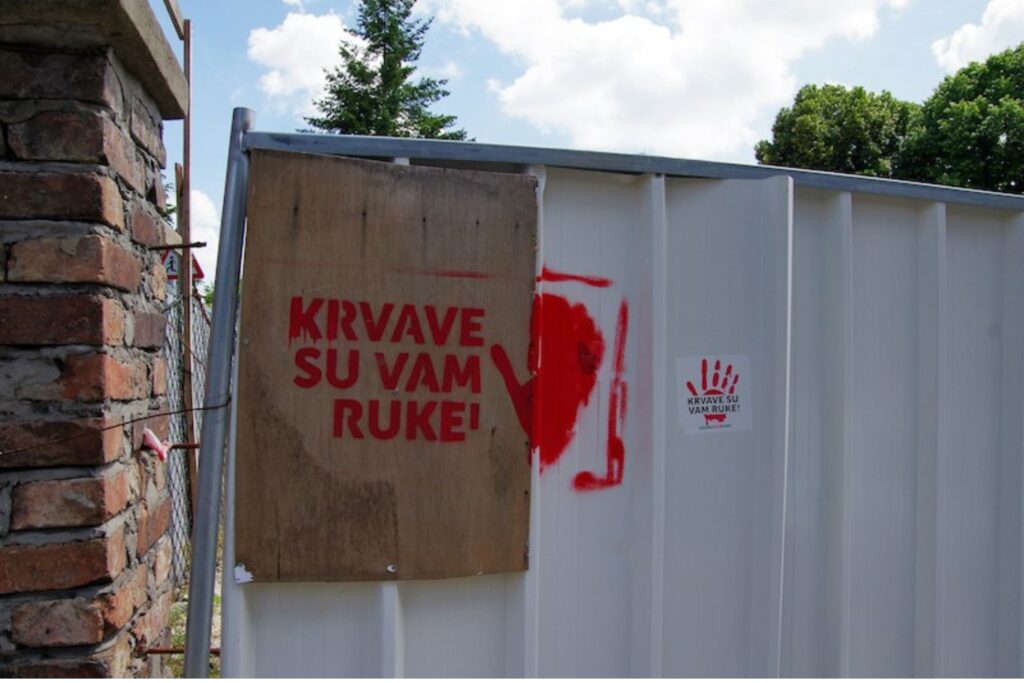
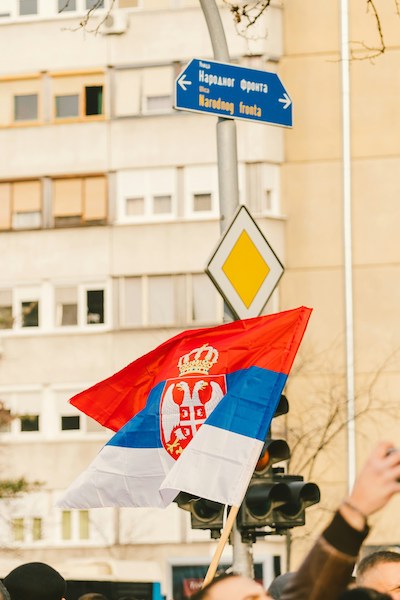
For this reason, the images of the massive Serbian student protests of recent months did not entirely surprise me.
They impressed me.
But they did not surprise me.
The protests in Belgrade: the true origin and sentiment
How could anyone fail to be impressed by what has become the largest student-led protest movement in Europe since 1968?
The protests began in Novi Sad in late 2024 and have continued at irregular intervals ever since. According to the Archive of Public Gatherings, demonstrations in May 2026 attracted around 180,000 participants.
Was this an unexpected eruption?
Not really.
The only sudden event was the collapse of the newly renovated railway station canopy in Novi Sad in November 2024, which killed sixteen people, including a six-year-old child.
What followed was not sudden at all.
The tragedy exposed years of accumulated frustration, distrust, and anger.
A tragedy became the catalyst for a broader demand for accountability and political change.
To better understand what is happening in Serbia today, I spoke with two Italian-Serbians with very different backgrounds.
One of them, whom I will call Diego P., is an Italian citizen who has lived in Novi Sad for several years and has joined demonstrations on multiple occasions.
The other is Mila Grujović, a Serbian-Italian student currently studying in Milan, whose family left Serbia during the turbulent years of the Balkan conflicts in the late 1990s.
Although they come from different generations and experiences, both told me essentially the same story.
According to Diego, public frustration had been building long before the Novi Sad tragedy.
Mila sees the movement in similar terms.
The issue is no longer limited to controversial contracts or foreign investment projects.
Chinese state-linked companies involved in the reconstruction of Novi Sad station are also involved in major infrastructure projects across Serbia, including highways and the Belgrade-Budapest railway, one of the flagship corridors of China’s Belt and Road Initiative.
What many protesters are ultimately asking is not only greater democratic accountability, media freedom, and institutional transparency.
They are asking a question that concerns the entire region, and Europe itself:
How are major infrastructure projects managed, and how transparent are the decisions behind them?
A movement with no leaders
The protests have generated extraordinary collective energy, yet the movement faces an obvious challenge.
The demonstrations have not yet produced a political alternative of comparable strength.
Opposition parties remain fragmented and weak after years of operating in a difficult political environment.
For this reason, many observers are watching with interest the possibility of a civic list supported by students and linked to Belgrade University Rector Vladan Đokić.
Even supporters of the movement remain cautious.
And What About the European Union?
I asked both of them a simple question:
Do students still believe in the European Union?
Their answers revealed a mixture of disappointment and lingering hope.
While Brussels continues to call for democratic reforms, many protesters consider European reactions insufficient.
Yet one detail remains significant:
She was referring to the remarkable journey made by hundreds of Serbian students in April 2025, when they cycled roughly 1,400 kilometres to Strasbourg to bring their concerns directly to European institutions.
The stability of the Balkans continues to influence the stability of Europe itself.
Most importantly, Serbia raises a question that should concern all of us:
What happens when an entire generation stops believing that institutions can correct themselves?
Serbia is searching for an answer.
And it is worth looking beyond the cafés of Novi Sad and the elegant façades of Belgrade to understand why.
Perhaps even beyond my beloved benches at Kalemegdan.

Lascia un commento