

As we watch the world we once knew changing day after day — increasingly shaped by geopolitics, and certainly not in the direction many had hoped for — there is one important reflection we should make.
Especially whenever we feel “powerless” as citizens, long before we think of ourselves simply as consumers within markets, including the tourism industry.
International influence is not exercised only through diplomatic crises, wars or declared invasions.
It also — and perhaps above all — passes through cultural contamination, including the one carried by our movements across borders.
If, while travelling, we observe not only monuments and fashionable cafés but also the less aesthetic sides of a country; if we speak not only with the woman in traditional dress performing for tourists, but also with young people in jeans holding smartphones in their hands, we begin to understand the forms of geopolitical soft power that have long been shaping territories around the world.
Processes of which we, too, become participants.
The Soft Power of UNESCO Heritage

UNESCO heritage sites were created with a clear and legitimate purpose: protecting cultural and natural heritage considered to have universal value, shielding it from destruction, neglect and uncontrolled exploitation.
UNESCO itself is a United Nations agency headquartered in Paris.
For countries with limited GDP and scarce resources dedicated to cultural preservation, obtaining UNESCO recognition for tangible or intangible heritage means:
- greater international funding for maintenance and protection,
- and increased tourism flows attracted by UNESCO-labelled beauty — now deeply embedded in our global aesthetic imagination.
Italy has been a member of UNESCO’s Executive Board continuously for the past twenty years, strengthened by its sixty-one recognised heritage sites.
This position gives Italy enormous soft power.
Another politically relevant aspect is often overlooked:
Over the past thirty years, many CIS countries — states emerging from the fragmentation of the Soviet Union — saw their historic centres, natural sites and symbolic places recognised as UNESCO heritage long before they became integrated into Western political and economic systems. (Many former Soviet states only entered the European Union in 2004.)
Long before institutional integration, the first forms of collaboration, influence — or, as I prefer to call them, contamination — between Western Europe and the post-Soviet space often passed through tourism, art, culture and, inevitably, money.
Central Asia: Between Turkey and Russia… There Is Us

Let’s talk about the so-called STAN countries — Kazakhstan, Kyrgyzstan, Tajikistan, Turkmenistan and Uzbekistan — towards which Western travellers are developing growing fascination.
When we arrive there, we are often mesmerised by these places without fully realising — or perhaps realising only later — that long before us, those same regions had already been part of the constant cultural and tourism orbit of Russia and China.
Our empire has only just arrived.
During my trip through northeastern Kyrgyzstan, for example, I discovered that Russia still maintains extremely strong linguistic soft power.
Russian is still taught in schools alongside Kyrgyz.
As a result, many working-age citizens migrate to Russia, generating remittances that still form a major component of the national GDP.
But something is changing.
Today, many young people are returning home — or choosing not to leave at all — thanks to the growing flow of money coming from Western tourism.
Alongside Russian, another language is increasingly entering the region’s sphere of influence: English.
And yet, while studying in Europe often remains financially inaccessible for the local average salary, studying in Turkey does not.
This is where Erdoğan’s strategy enters the picture.
For years, Turkey has financed prestigious private universities in Kyrgyzstan, offering generous scholarships to students — provided they speak Turkish.
Moldova: From Europe’s Poorest Country to a Contested Cultural Space
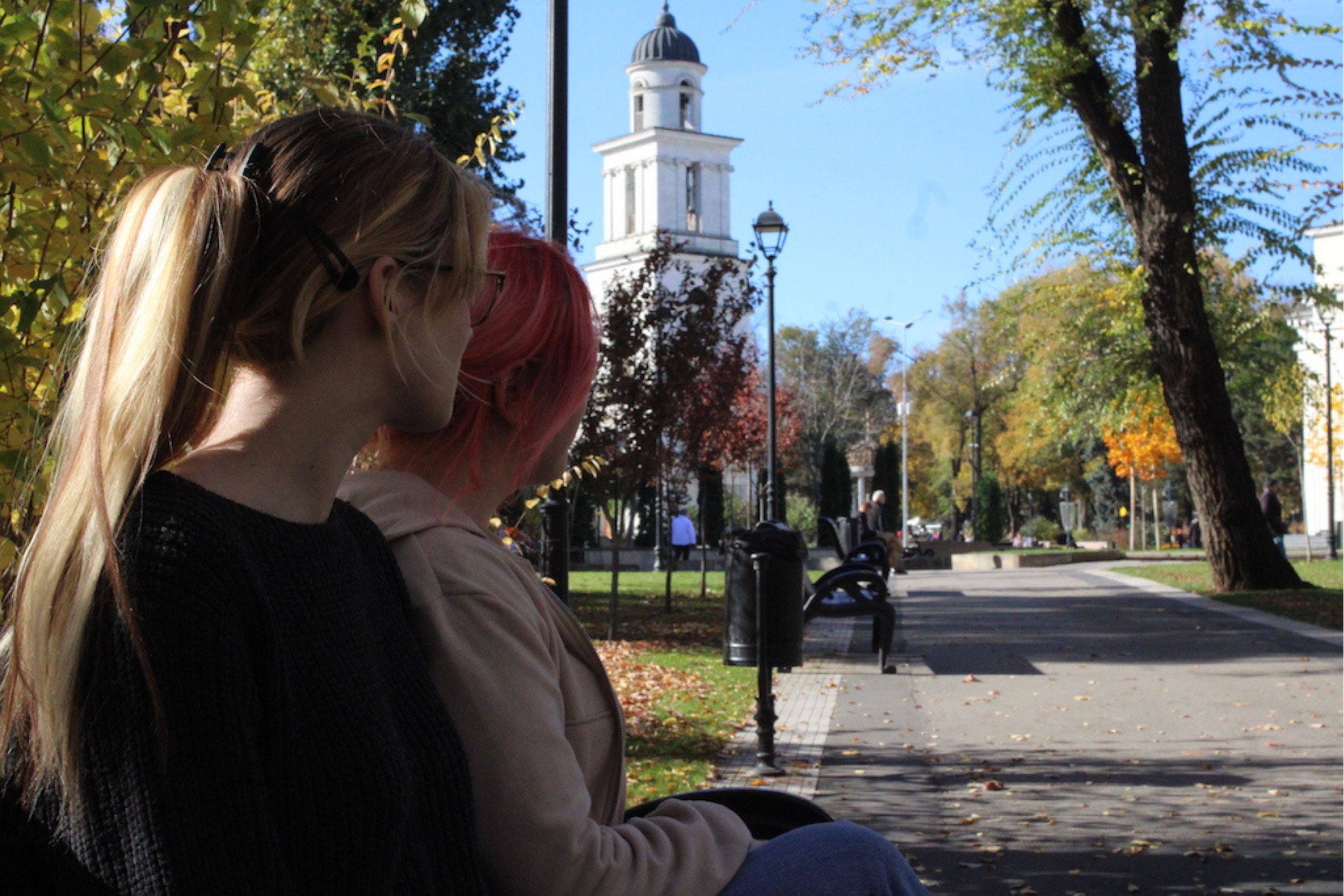
cosa vedere a chisinau ©sabrinabarbante
According to the National Bureau of Statistics of the Republic of Moldova, tourism arrivals increased by 55.1% between 2023 and 2024 (source: EU Tourism Platform).
As of 2024, the main countries of origin for incoming tourism are Romania, Italy, Germany and Bulgaria, together accounting for 82.9% of total arrivals.
Most significantly, there has been strong growth from European countries outside the CIS region.
Tourism is effectively becoming Moldova’s new political language.
After Maia Sandu’s re-election — widely interpreted as another step towards closer integration with the European Union — the country’s national narrative has gradually shifted: from “former Soviet republic” to “Europe’s new frontier.”
This transformation also passes through the image Moldova builds for those who arrive, leave — and for those who remain.
I explored Moldova’s economic rebirth and identity reconstruction (and deconstruction) more extensively in another article.
In Georgia, Tourism Is Quietly Shifting the Balance

In recent years, Georgia has become one of the clearest examples of geopolitical tension within the post-Soviet space.
In December 2023, the country obtained official EU candidate status.
Georgia borders Russia, hosts two Moscow-backed separatist regions and already experienced Russian military invasion in 2008.
For many Georgians, European integration represents not only political alignment, but also symbolic and economic protection — especially given the European Union’s enormous ability to attract development funding.
And yet, the path remains deeply paradoxical.
Economically speaking, a significant portion of Georgia’s economy still depends on trade relations with Russia.
So what is now rapidly shifting this balance?
Western tourism flows.
Direct flights increasingly connect not only Tbilisi, but also smaller yet strategically important cities such as Kutaisi.
Even the fact that fifteen Georgian sites have been under UNESCO candidacy since 2007 is part of this broader geopolitical game.
And 2007 was not a neutral year.
It was marked by major anti-government protests, amid suspicions — never fully proven — of Russian interference aimed at destabilising the country.
One year later, in 2008, Russia invaded South Ossetia.
Can We Still Pretend Travel Is a Neutral Consumer Choice?

Every time we decide where to go, what to look at, what to photograph and what to tell others about, we are already participating in networks of influence that existed long before us and extend far beyond us.
This does not mean we should stop travelling, nor give up the pleasure of movement.
But perhaps we can begin travelling with greater awareness — capable of holding together both beauty and complexity.
In a world where power increasingly manifests itself through weapons, threats and open intimidation, there still exists another system of influence and contamination moving through schools, languages, scholarships, cultural heritage and tourism narratives.
And this is where even your next trip becomes a form of political literacy.




Lascia un commento