

[leggi in italiano]
If we believe tourism only impacts the cost of living, environmental sustainability, local commerce and gentrification, we are mistaken.
Tourism also has a significant impact on geopolitics.
Moldova’s new territorial narrative, increasingly open to European tourism flows, has influenced what can be described as a historic political decision: leaving the so-called CIS area — the Commonwealth of Independent States — one of the last remaining formal ties with the post-Soviet space.
A complex decision and a slow, gradual process

Chisinau, Moldova – July 17, 2019: Political matryoshka dolls on a small flea outdoor market in central part of Chisinau city
This is not a sudden rupture, but rather the formalisation of a process that has already been unfolding for years.
After Russia’s invasion of Ukraine in 2022, Chisinau gradually stopped participating in the organisation’s activities, reducing its role to a purely nominal presence.
The official withdrawal therefore marks a symbolic rather than operational shift: Moldova is acknowledging a distance that already existed and deciding to make it definitive.
What is the CIS?
The so-called CIS area — the Commonwealth of Independent States — was created in 1991, at the moment the Soviet Union dissolved.
It was an attempt to preserve a form of cooperation among several former Soviet republics, particularly on economic, political and military matters.
For many states still heavily dependent on Russian remittances and economic ties — such as Kazakhstan or Kyrgyzstan — its existence still carries practical meaning.
More than a structured union, however, the CIS long functioned as a transitional space: a grey zone between what had existed before and what had not yet fully emerged.
Over time, many of its members began following different paths, oscillating between integration with Russia and gradual openness towards Europe.
Chisinau’s decision

cosa vedere a chisinau ©sabrinabarbante
Moldova’s withdrawal fits precisely within this broader movement.
In recent years, the country has progressively realigned both its institutions and foreign policy towards the European Union (I also wrote about it here), obtaining EU candidate status in 2022.
Also read
Chisinau: What to See in Moldova’s Capital – A Traveller’s Guide to a City Between Worlds
At the same time, the Moldovan parliament started systematically reviewing agreements signed within the CIS framework, progressively reducing their concrete impact while also denouncing the collapse of the organisation’s founding principles — including the respect for territorial integrity — which became impossible to ignore after Russia’s full-scale invasion of Ukraine.
Leaving the CIS is therefore not an isolated gesture, but the result of a precise internal political direction: a parliamentary majority favourable to European integration, growing distrust towards structures linked to Moscow and the desire to redefine the country’s international positioning — including its image as a destination increasingly open to Western European visitors.
The complexity of a choice and a new identity in the making
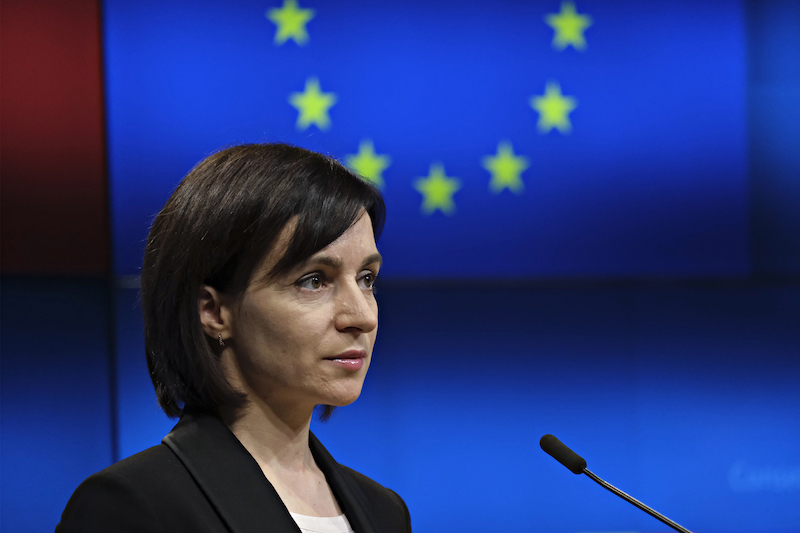
Maia Sandu – DepositPhoto
As often happens in this part of Europe, formal political decisions never fully exhaust the deeper complexity beneath them.
Leaving the CIS means distancing oneself from a system, but it does not necessarily mean leaving behind its history, nor its tensions.
Moldova remains a country shaped by fragile balances: between European aspirations and Russian influence, between centre and peripheries, between present and memory.
More than a definitive rupture, this decision tells the story of a direction.
And perhaps of a country slowly trying to stop belonging to a space that, in the meantime, has changed just as much as the people who once inhabited it.




Lascia un commento