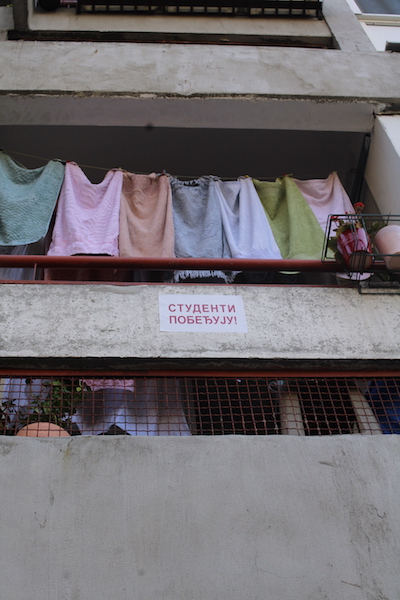
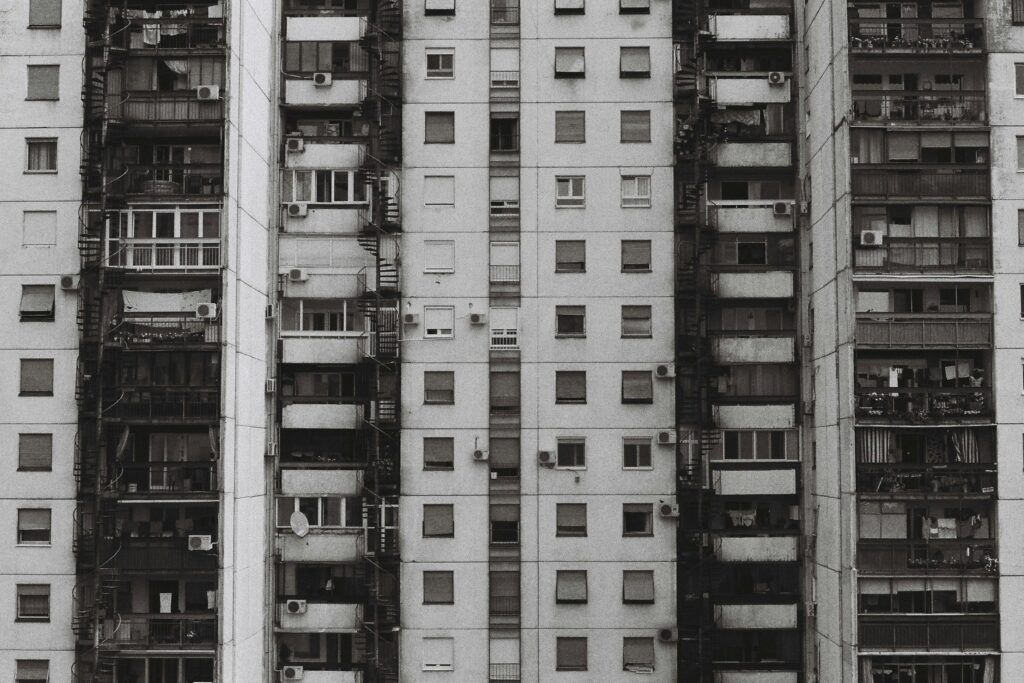
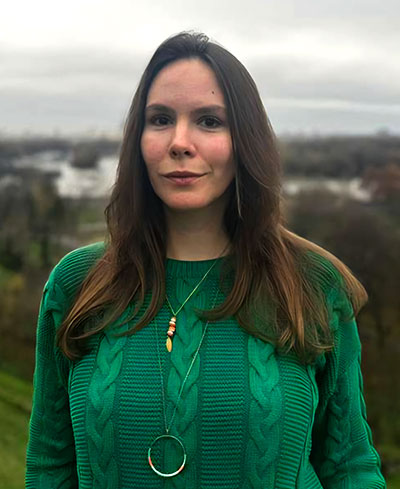
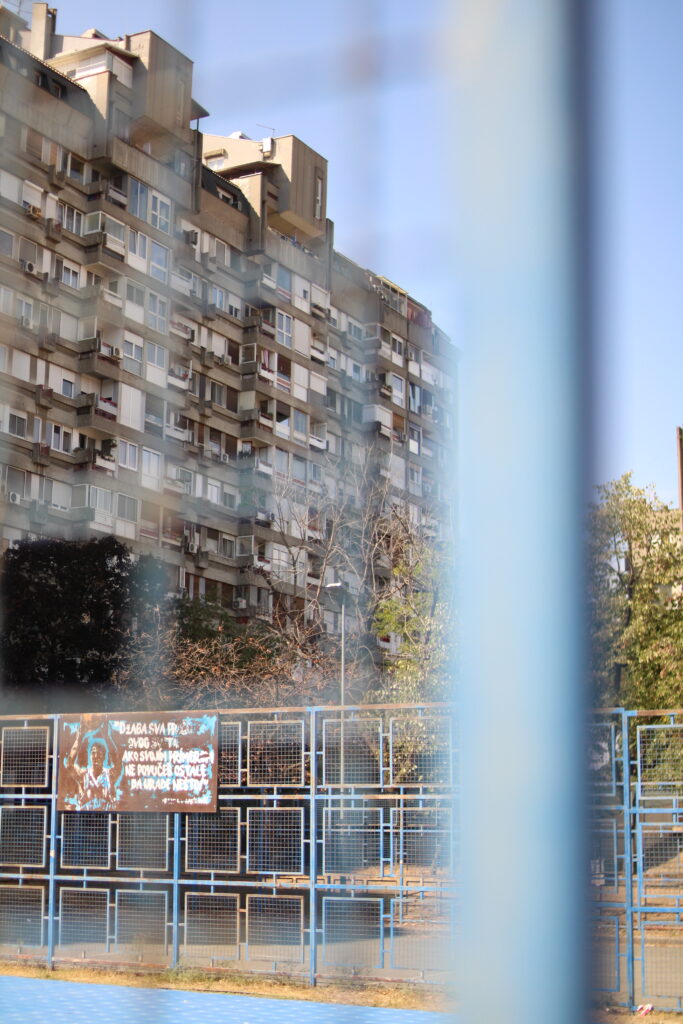
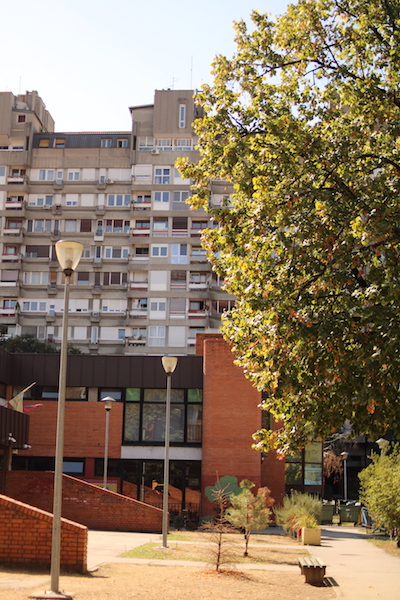



There are at least three or four generations living inside Block 23 in Novi Beograd.
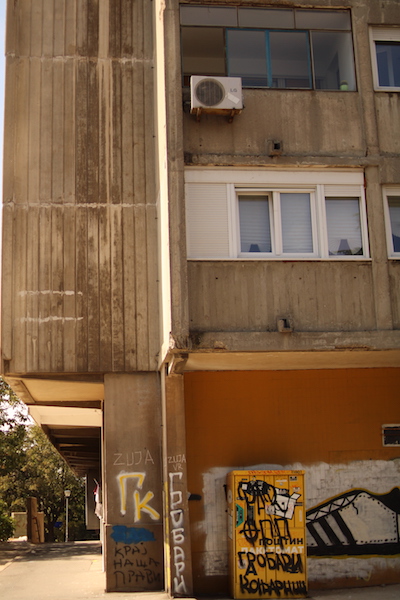
Anđela Savić’s grandfather was in the military, and the apartment was assigned to him when the neighbourhood was growing together with the new socialist Belgrade. Her parents stayed. Today she lives there, surrounded by the children and grandchildren of families who arrived during those same years.
It is one of the first things Anđela tells me when I ask her what it actually means to live in Belgrade’s Brutalist blocks.
Today, her building also has lockers for short-term rentals.
Rents, she says, have risen enough to make it difficult for some of her friends to live in the neighbourhood where they would like to move, or remain.
Short-term rentals are now joined by residents from newer diasporas, especially from Russia and Ukraine, often arriving with greater purchasing power than the Serbian average.
And yet, whenever Anđela talks about Block 23, she keeps coming back to another word: planning.
Because the blocks of Novi Beograd are not simply huge concrete buildings constructed during socialist Yugoslavia. They were born within a very specific idea of what a city should be.
Block 23 was built between the late 1960s and the 1970s, designed by architects Aleksandar Stjepanović, Božidar Janković and Branislav Karadžić.
It was not simply a collection of residential buildings. The plan included a school, kindergartens, a community centre, playgrounds, pedestrian routes and extensive internal green spaces.
Urban planning standards of the time established minimum amounts of green space and public services per resident, areas dedicated to children and criteria regulating the amount of daylight reaching apartments.
In Block 23, for example, plans allocated around 11 square metres of green and open space per resident, alongside specific areas for schools and childcare facilities. (See this paper for further reading.)
Something keeps returning in my conversations with the people who live in these places: before the houses were even built, someone had asked how people were going to live there.
Anđela explains it through almost domestic examples: the distance from schools, places where children could move freely, sunlight, greenery, the possibility of living close to one another while still maintaining a certain degree of privacy.
During the 1990s the neighbourhood was rougher: drugs, dealing, clashes between rival football supporters. From the 2000s onward, she says, it became much safer. Later came artists, new residents and short-term rentals.
When a foreign investor showed interest in building on one of the remaining open areas between the buildings, residents began using it more visibly, in a kind of urban guerrilla action.
Collective clean-ups, children’s play equipment, everyday presence: not simply to make that “empty space” prettier, but to demonstrate that a space without a building on it is not necessarily empty.
Her reflection focuses on the anti-logic of contemporary development: construction happens because there is space that can be capitalised on, without necessarily considering the meaning – or lack of meaning – of a new building, or the impact it might have not only on the architectural landscape but also on the community.
I ask her:
“Did they manage to stop the construction?”
It is probably one of the sentences that best describes the condition of many Belgrade neighbourhoods today.
Anđela’s contrast is very simple: the blocks had a plan.
Many contemporary buildings have, above all, a business plan.
It is the same observation that Milica Batričević and Pavle Živković make to me a few days later, on the other side of the city.
Pavle, editorial manager at Mansarda Radio, is an activist who has been very present in the protests that have been taking place across the city for months.
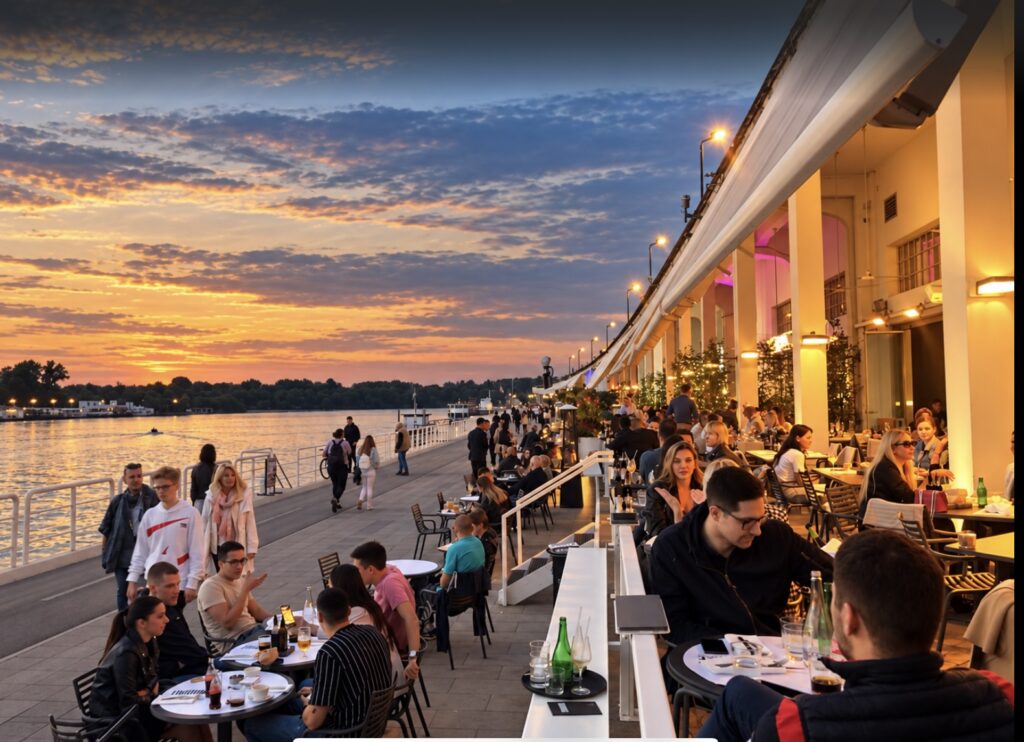
In Belgrade, it is almost impossible for this conversation not to lead eventually to Belgrade Waterfront, the urban development project that has generated controversy and strong criticism among many residents, who have repeatedly taken to the streets over opaque contracts, the methods used to clear the area and its environmental impact.
The enormous project along the Sava originates from a joint venture signed in 2015 between the Serbian state and Eagle Hills, an Abu Dhabi-based real estate company. The Serbian state owns 32 percent of Belgrade Waterfront, while the remaining 68 percent belongs to Eagle Hills.
On its website, the project presents itself as a newly planned community including homes, schools, kindergartens, parks, commercial spaces and services.
But for many of the people I meet, the fracture is not merely architectural.
It concerns procurement, transparency and respect for the civic fabric of the city as much as its urban fabric.
Anđela talks about apartments marketed as luxury properties in buildings where, in her view, density and lack of privacy contradict that very promise.
Above all, though, she returns to the transformation of Savamala, the neighbourhood that occupied part of the area affected by the development.
During the night between 24 and 25 April 2016, masked men blocked Hercegovacka Street, confiscated phones and detained and tied up several witnesses while bulldozers demolished a number of buildings.
Serbia’s Ombudsman, the Zaštitnik građana, later concluded that the police had deliberately failed to intervene. Then-prime minister Aleksandar Vučić, now the resigning president and a candidate in the October 2026 elections, subsequently stated that senior city officials had been behind the demolitions.
One of the witnesses detained that night, Slobodan Tanasković, died in hospital around a month later. Reports at the time referred to heart problems; it has not been established that his death was caused by the events in Savamala.
A piece of the city was physically erased during the night while citizens unsuccessfully called on the police to intervene.
The debate surrounding Waterfront, then, is not simply a debate about the aesthetics of new skyscrapers along the Sava.
It is a debate about the process through which a city changes.
In the Dorćol neighbourhood I interview Milica Batričević, a feminist activist, communication and community manager at BeFem.
We talk about protests, dissent and, inevitably, the role of feminist activism in the current political landscape.
Somewhere between a Balkan coffee and a poster, I also tell her about my research into everyday life inside Belgrade’s Brutalist buildings.
She invites me to visit the area where she lives, on the eastern hills of Belgrade.
At six that same afternoon I find myself with Milica and Pavle in Zvezdara Forest.
The first thing that few people in the city know is that this is not a natural forest.
The first thing that few people in the city know is that this is not a natural forest.
After the Second World War, tens of thousands of poplars, maples and black locust trees were planted through large-scale voluntary actions involving citizens and young people. Most of the trees were planted between 1948 and 1950. One of the purposes of the afforestation project was to protect this part of Belgrade from the Košava, the strong and cold south-easterly wind that crosses the city.
The planted area eventually covered around 145 hectares.
In socialist Yugoslavia, voluntary work actions were also a way of building infrastructure and shaping the territory through collective responsibility.
Milica and Pavle have spent years reconstructing the forest’s history.
It has not been easy. Much Serbian archival material has never been digitised.
They searched through old newspapers and archives with the help of historians and friends. They involved local high-school students and later university students, some of whom devoted coursework and theses to the forest.
Today Zvezdarska šuma is recognised in urban plans as an area of natural value. The municipal company JKP Zelenilo-Beograd also lists Zvezdara Forest among the natural assets subject to specific protection and maintenance.
Maintenance that, in reality, is often neglected, something that causes considerable frustration among local residents.
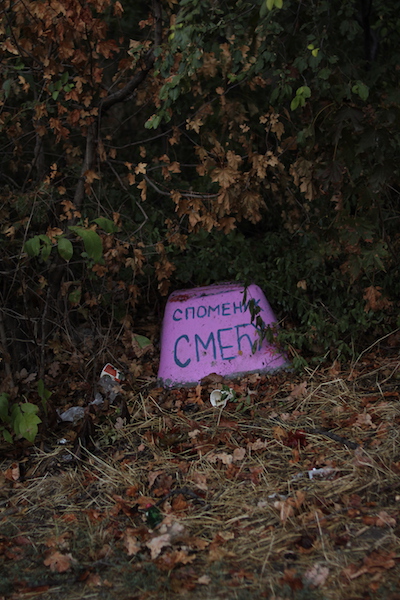
And again, resident community is the one that takes charge of many livability and care issues. They show me benches built by residents from reused materials, small rubbish bins installed independently and ironic or provocative initiatives such as a “monument to rubbish”.
When institutions fail to show up, the community steps into the space of maintenance.
Not simply to quietly replace them, but often to remind them that the responsibility still belongs to them.
From the top of the building where Milica lives – a shared rooftop terrace with sofas, lights and edible plants – I can see the enormous green lung on one side.
On the other, I can see Rudo.
The three towers of Istočna kapija Beograda, Belgrade’s Eastern City Gate, were built between 1973 and 1976 and designed by architect Vera Ćirković.
They are three 28-storey buildings arranged around a central space containing a square and a playground.
A space almost held and protected by three giants, like a kind of architectural womb.
From the top of the three blocks, Belgrade can be seen from one of its highest points. Up there the Košava arrives with force. At ground level, it does not: the three blocks provide shelter.
Here I meet Dragan, a retired man who dedicates part of his time to looking after the building, watching over the shared spaces and taking care of small maintenance jobs.
Talking to him, the same idea I encountered in Block 23 and Zvezdara Forest returns:
to inhabit a place also means to watch over it.
To watch over an entrance, a bench, a forest. An apparently empty space that does not therefore lack meaning.
On the other side of the city stands the Western City Gate.
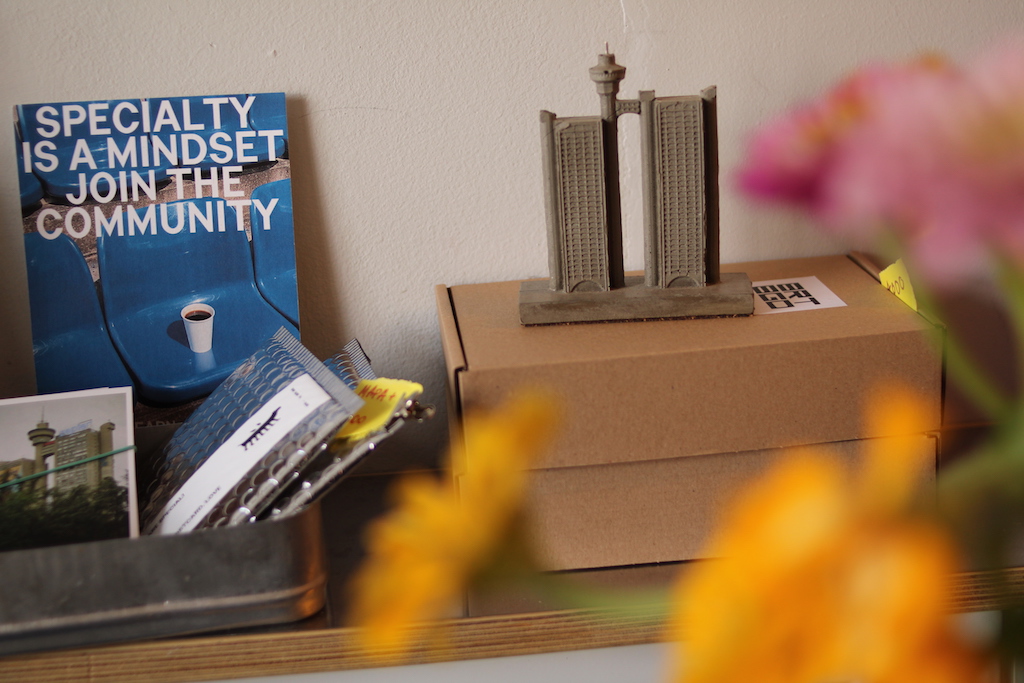
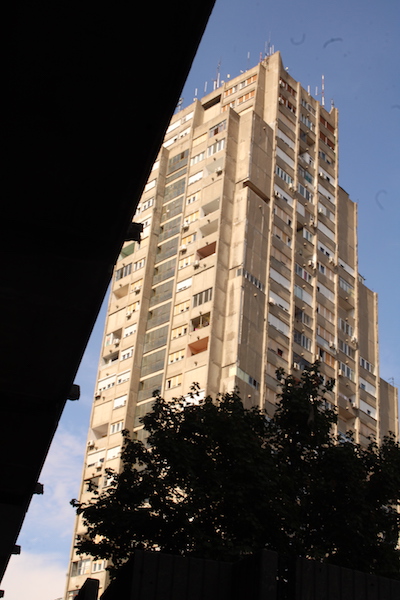
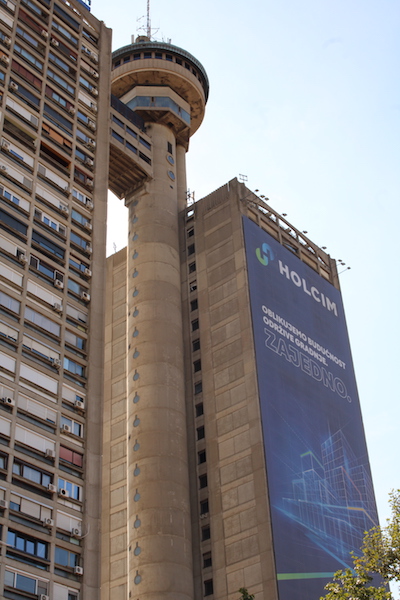
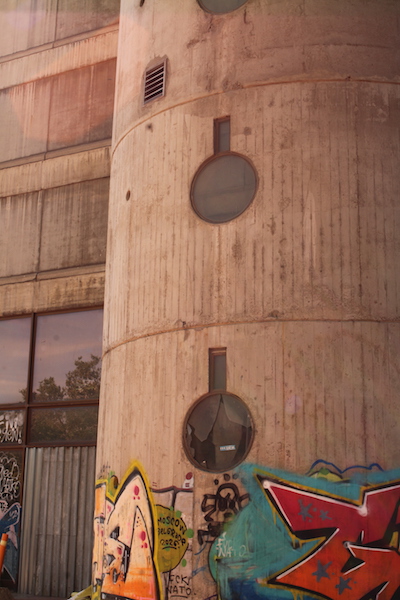
The Genex Tower is perhaps the Belgrade Brutalist building most easily transformed into an image: the most iconic in architecture books and, needless to say, on Instagram.
Two towers connected at the top, visible from the motorway as soon as you arrive from the airport.
The commercial tower, originally built for the state-owned company Generalexport, has remained largely unused and was sold at auction in 2023 for around €20 million to the company Eureka Bar.
Today it remains largely empty and deteriorating, while generating revenue from the enormous advertising banners covering both façades.
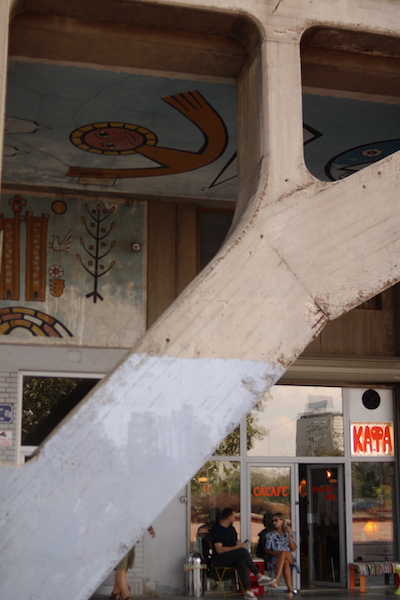
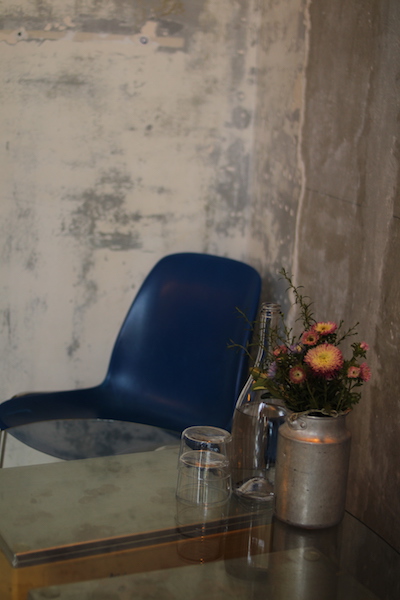
At ground level there is now a small café, contemporary art and a handful of businesses.
The residential tower, on the other hand, is still, first and foremost, a home.
And this is precisely where contemporary fascination with Brutalism encounters one of its paradoxes.
These buildings have become global icons.
They are photographed, filtered, used in reels, transformed into scenery.
Apartments become experiences to book. On the thirtieth floor of the residential tower there is an apartment rented to tourists which, I am told, is booked until 2029.
But behind those windows people still live.
People who wonder when they might have to leave and, for those who own their homes, when it might become more convenient to follow the same logic and temporarily lend this piece of the city to tourism.
So how should you stay in a Brutalist block in Belgrade?
My answer is: perhaps you shouldn’t.
These neighbourhoods are already being transformed by real-estate pressures, rising prices, new international residents and the growth of short-term rentals.
And there is a much more interesting way to experience them.
Have a coffee beneath Genex.
Talk to the people who live in Rudo.
Spend a few hours in the parks of Novi Beograd.
Walk through Block 23, or Blocks 61–63, and try to understand why the schools, kindergartens, pedestrian routes and green spaces are exactly where they are.
Go to Zvezdara and discover that a forest which appears natural is actually the result of thousands of people who, almost eighty years ago, decided to plant trees for people who would come after them.
Take a tour with a local guide.
Go into the city archives.
Don’t ask only who designed a building. Ask what kind of life that design was made for.
read it in english Fammi indovinare, stai pianificando le nuove destinazioni da vedere appena poss
L’autunno non è solo una stagione climatica ma un “tempo sospeso”: chi viaggia, come te, lo a

Quanto è naïf l’idea che siamo sempre e solo noi ad attraversare una città, un luogo, un paese.

Parco Tašmajdan, a Belgrado, è uno spazio di passaggio per i turisti, e di sosta per chi a Belgrad


Lascia un commento