

I’ve just returned from my first trip to Moldova, after spending a few days in its capital, Chișinău.
Direct flights from Italy and several cities of Europe are increasing, making travel easier for those of us from the privileged Schengen area, with our strong passports and our tendency to turn new destinations into “the next place to be”.
These same flights now also carry waves of content creators, eager to rebrand the capital as Europe’s newest hidden gem.
And yet, on board, the divide between passengers is still clear: Italians / tourists, curious travellers, on one side; Moldovans, Russians, Ukrainians on the other.
A numerical gap that, I suspect, won’t last long.
And once the plane lands, the shared route splits again at passport control: EU citizens to the left, “the rest of the world” to the right. In a few minutes, I’m outside looking for a cub.
The people I spoke to on the plane wait in a slower queue, on the other side of an invisible line.
This is exactly where any itinerary of Chișinău should begin; with the awareness of a double narrative, two parallel roads that shape how we read what we see.
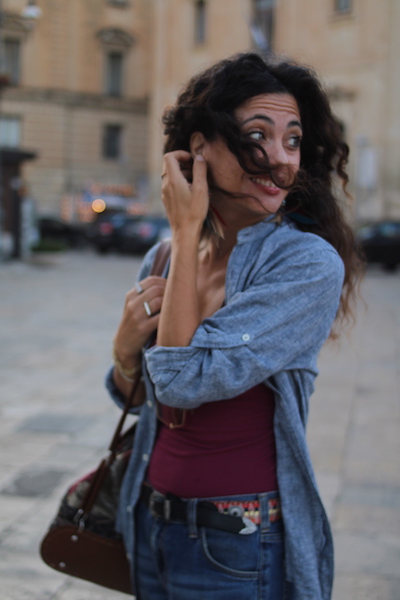
I’m Sabrina Barbante, independent blogger.
I write about destinations as an excuse – a door, actually – to talk about international politics, identity, and the social undercurrents behind what we call “travel”.
You’ll find itinerary-based guides like this one, and others that are unapologetically geopolitical.
Piața Marii Adunări Naționale

Piața Marii Adunări Naționale
Every capital has its gravitational point; here, it’s this wide, almost austere square – more a place of passage than of gathering, yet crossed by a silent force (and by dozens of university students at every hour of the day).
This is where major civic ceremonies take place, where political rallies explode, where military parades carve their presence into collective memory.
It is also here that, in 1989, thousands gathered to demand independence from the Soviet Union.
After the re-election of Maia Sandu, the first woman president and a key figure of Moldova’s political shift toward Europe, the square has acquired the tone of a manifesto.
Sandu has repeatedly expressed the national intention to pursue EU integration, yet in a city where many still speak Russian as their mother tongue and look to Moscow like one looks to a distant but formative relative, Europe is an aspiration, not yet a certainty.
What to see in and around the square
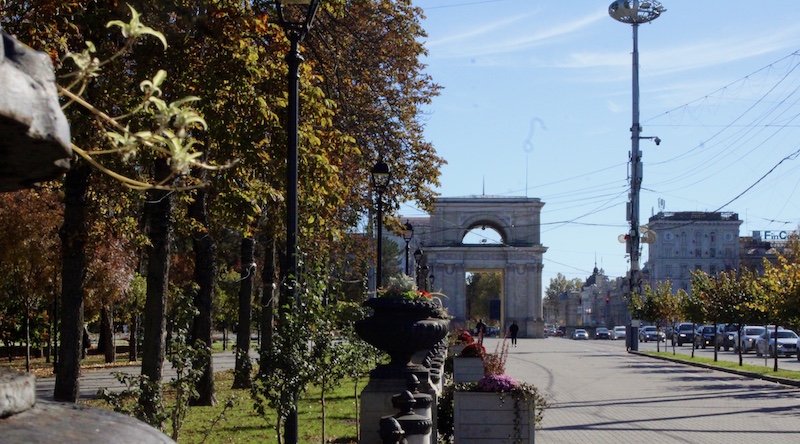
- The Triumphal Arch (Arcul de Triumf) – the “Holy Gate”, built in 1840 to commemorate a Russian victory over the Ottoman Empire. A reminder that in Chișinău, every symbol has more than one owner and every stone, more than one story.
- The Cathedral of the Nativity and its central park, a blend of neoclassical architecture, quiet benches, elderly passersby, and a surprising number of very young people.
- The 24-hour Flower Market – yes, open all night.
- Caffé Bonjour – a French-inspired outdoor café nestled in the park. Without dwelling on the politics of French charm exported everywhere, this spot also introduces you to Chișinău’s love for music: there’s a kiosk with a piano, and live performances almost every evening.
- Eugen Doga Street – a tribute to the renowned Moldovan composer. Notice the pavement shaped like piano keys.
- The modern “Tree of Life” mosaic – a newly invented symbol created by the National Tourism Board. It represents hospitality, wine, gastronomy, and tradition — the pillars of global tourist imagination.
Not poetic, perhaps, but politically revealing.
Ștefan cel Mare Park
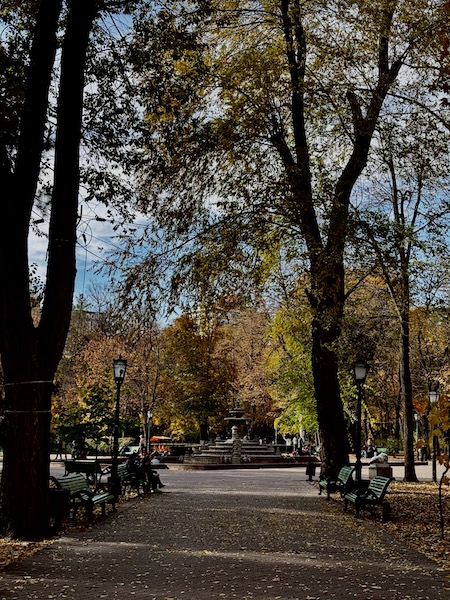
parco stefan cel mare chisinau
A seven-hectare park in the heart of the city.
Here, under wrought-iron lamps and lines of trees, Chișinău breathes collectively: students, retired couples, soldiers on break, families.
Three nights a week, people gather to dance ballroom in the open, thanks to a civic-inclusion programme of intergenerational activities.
Co-governed by the city administration aligned with Sandu’s pro-European party, the park is an open-air archive of Moldova’s political past.
Its very name has changed with each ideological shift, from honoring Tsar Alexander I, to commemorating Pushkin, to celebrating the national hero Ștefan cel Mare.
The architecture reflects this layering: gates designed in Odesa, statues removed and restored, marble lions polished smooth by decades of hands.
Under the lime trees, once the site of a military cemetery, today’s Moldova gathers to slowly write a different story.
Central Station & Central Market
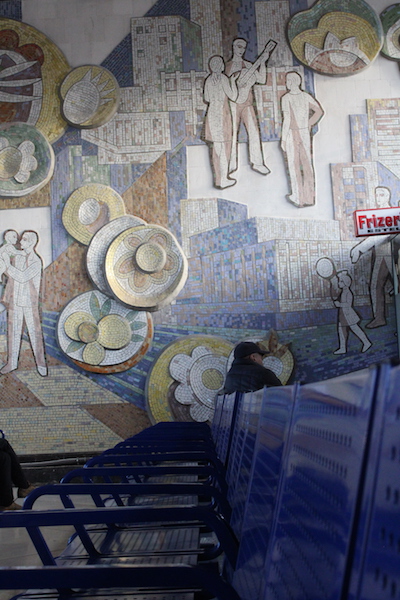
stazione centrale chisinasi ©sabrinabarbante
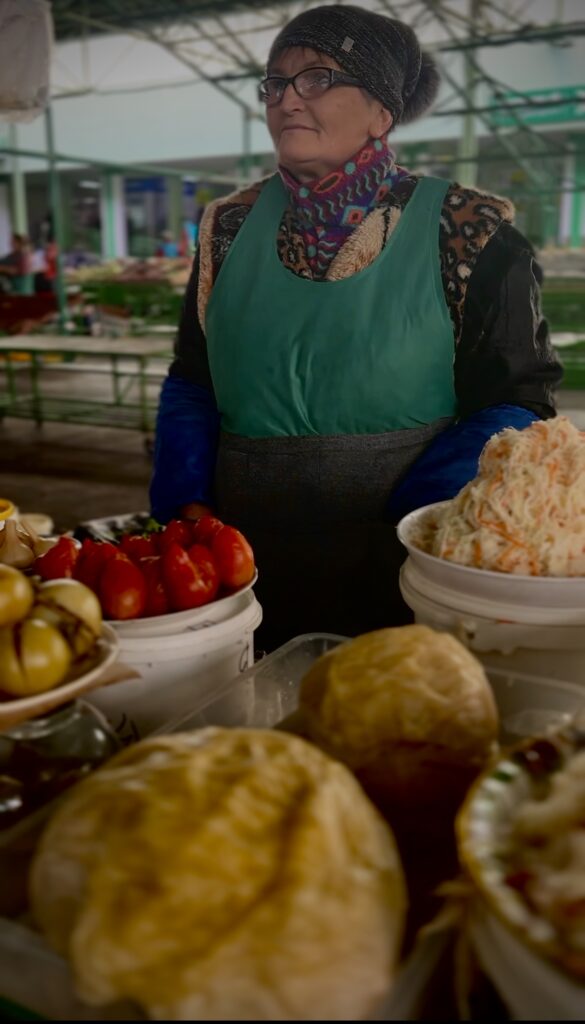
mercato centrale chisinau ©sabrinabarbante
A short walk from the monumental centre, the railway station is another world.
Taxis, marshrutkas, vendors, luggage rolling over cracked pavement – this square tells you more about contemporary Moldova than any museum could.
From here depart buses for Odesa, Kyiv, Bucharest, and dozens of villages absent from glossy travel guides.
Across the street lies the Central Market, a labyrinth of fruit stalls, spices, phone accessories, flowers, baked goods, and street food – the heartbeat of a city where Soviet echoes coexist with new economies.
Inside the station, a Soviet-era mosaic stretches across an entire wall: workers, trains, progress – the Moldova that once imagined itself as the “Eastern gateway” of the USSR.
The Museum of Ethnography & Natural History

museo storia natueale chsinau ©sabrinabarbante
Built in 1905, the museum surprises with its pseudo-Moorish style.
Inside, prehistoric fossils meet embroidered textiles, and mannequins of past rural life peek out from glass cases.
The building is stunning – though partially overshadowed by a massive installation of (yes, guess what?) the Moldovan Tree of Life.
Still, it’s a meaningful place: an institution learning to narrate itself again.
Valea Morilor Park

Parco Valea Morilor ©sabrinabarbante
A few minutes from the centre, Valea Morilor opens like a deep breath.
Created in the 1950s around an artificial lake, it was once a showcase of socialist leisure: paddle boats, music, family picnics. After the fall of the USSR, it fell into decay.
Today, restored thanks to EU funding, it is one of the city’s most beloved locations.
Here, among pergolas, white pavilions, and long stairways descending to the water, you feel the physical reconstruction of a country seeking belonging.
A hidden gem
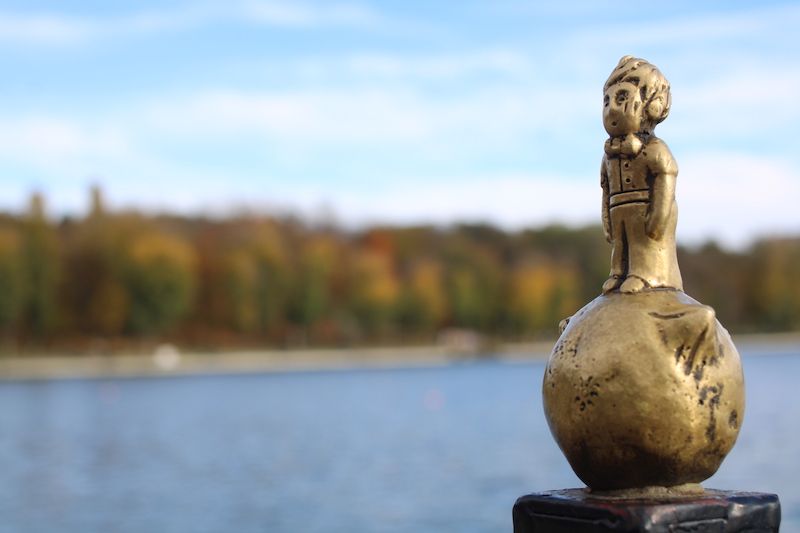
piccolo principe chisinau ©sabrinabarbante
Somewhere around the lake (I won’t say where), stands the smallest monument in Moldova:
a tiny Little Prince statue, just 11 centimeters tall.
Placed in 2018 by artist Igor Udușlivîi, it sits atop the 23rd metal sphere along the lake railings, imagined as a miniature planet.
In winter, someone often knits him a scarf.
Modernism & Brutalism in Chișinău
Walk through Chișinău and you quickly realize the city also speaks the language of concrete — the aesthetic legacy of Soviet modernity and post-Soviet disillusionment.
Key architectural stops
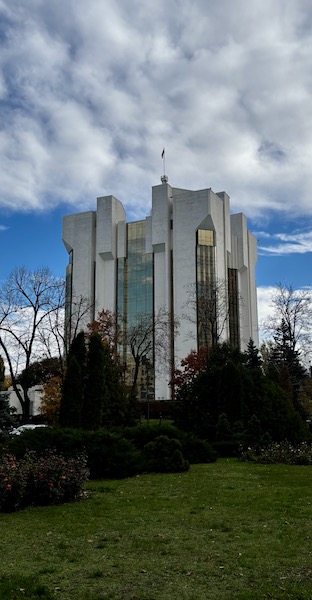
palazzo presidenziale chisinau ©sabrinabarbante
Leaving Chișinău
- Presidential Palace, rigorous, restored after being set on fire in 2009.
- The Opera and Ballet Theatre, a temple of Soviet classicism still shaping cultural identity.
- Hotel Cosmos, built in 1983, curved façade, iconic windows; a relic of modernist ambition now softened by contemporary renovations.
Chișinău moves like a pendulum between what it was and what it may want to become.
Leaving Chișinău
Leaving this city isn’t like closing a book.
It feels more like stopping mid-chapter, knowing many pages are yet to be written.
Between restored Soviet parks, European-funded projects, Russian echoes, and French-style cafés, Chișinău is negotiating its identity in real time.
It left me with many questions:
- Could it really become “the next Ukraine” in geopolitical terms?
- Is the EU the answer to its identity struggles?
- How long before tourism deepens — rather than bridges — social inequality?
And one certainty: Chișinău is absolutely worth the trip, and the discomfort of its contradictions.




Lascia un commento